07.09.26

UTMB Group and MARATHON DES SABLES join forces to open a legendary race to four all-terrain wheelchair teams

HOPE: four all-terrain wheelchair crews on the UTMB course

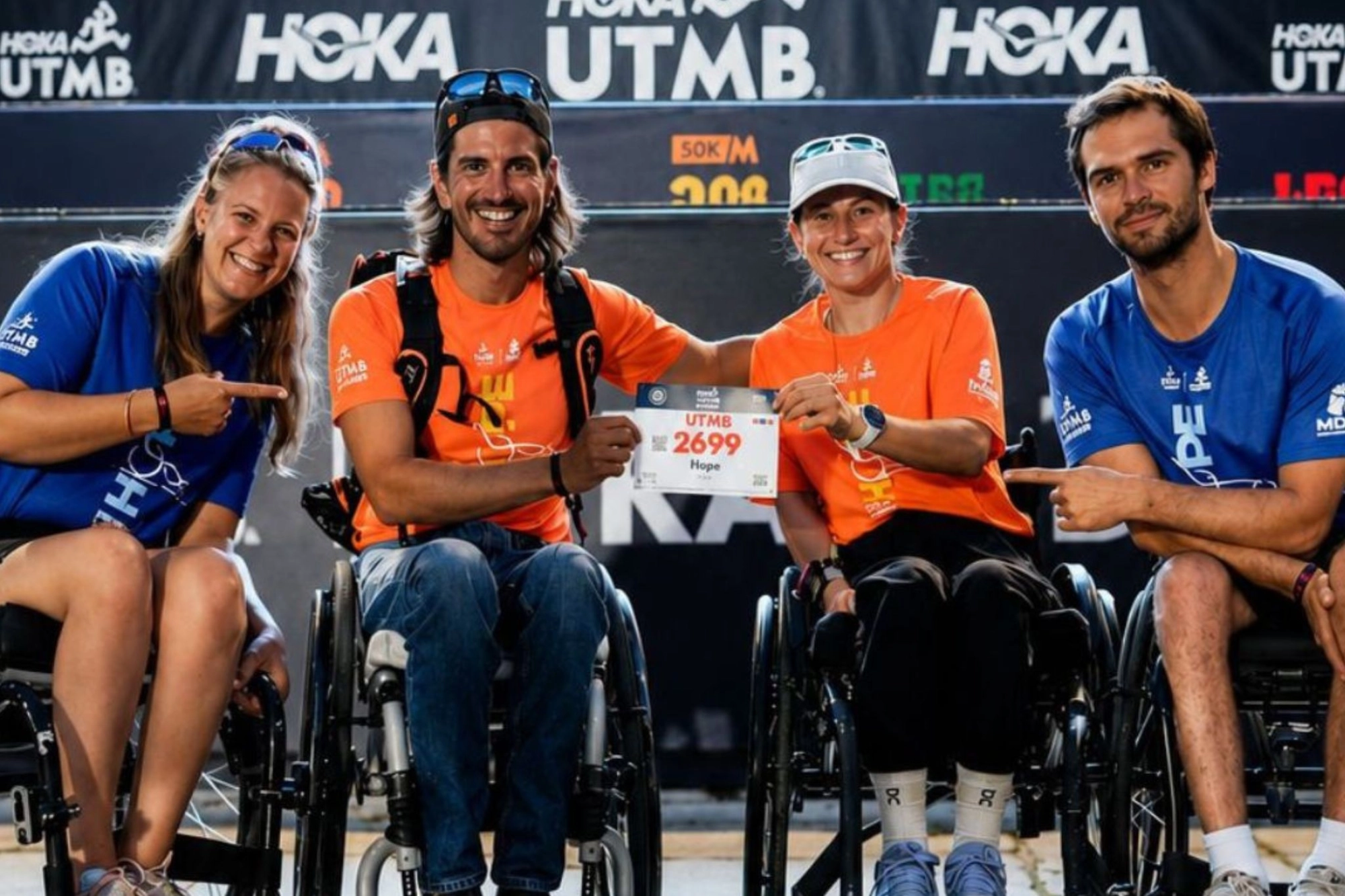
From August 28 to 30, 2026, four all-terrain wheelchair athletes and their crews covered most of the UTMB course as a relay. Named HOPE, this first test edition, born from the collaboration between UTMB Group and MARATHON DES SABLES, opens a new chapter in both organizations’ commitment to inclusion.
A PROJECT BORN FROM A SHARED CONVICTION

Trail running has always been about pushing limits, solidarity, and sharing the mountain. UTMB Group and Marathon des Sables, both committed for several years to making real room for athletes with disabilities at their events, decided to take a new step forward.


Together, they launched HOPE: a collective, experimental project designed to explore new ways of opening up some of the mountain world’s most iconic routes to wheelchair users.


HOPE starts from a simple idea shared by both organizations: what seems out of reach today becomes possible when experience, adaptation and the strength of the team come together.


“HOPE is much more than a name. It embodies a twofold ambition: making the mountains increasingly accessible and changing perceptions of disability through the power of the team.”  Cyril Gauthier, MDS Director

Image d'illustration article seul

170 KILOMETRES, 10,000 METRES OF ELEVATION GAIN, FOUR CREWS

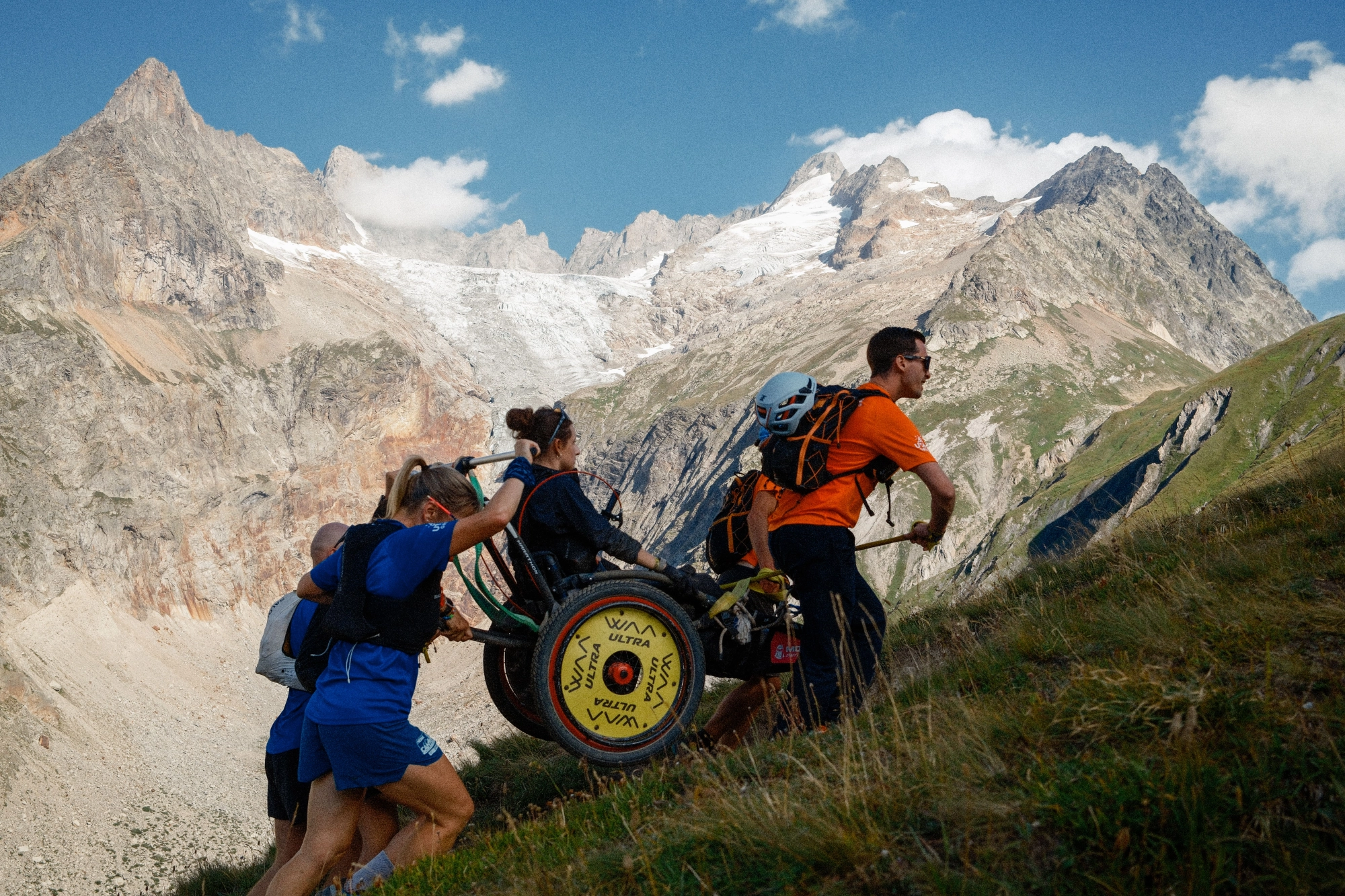
At the HOKA UTMB Mont-Blanc 2026, four all-terrain wheelchair (ATW) athletes set off on this collective adventure. Separate from the official race, they followed most of the UTMB route, with adjustments made only on the sections impassable in a wheelchair.


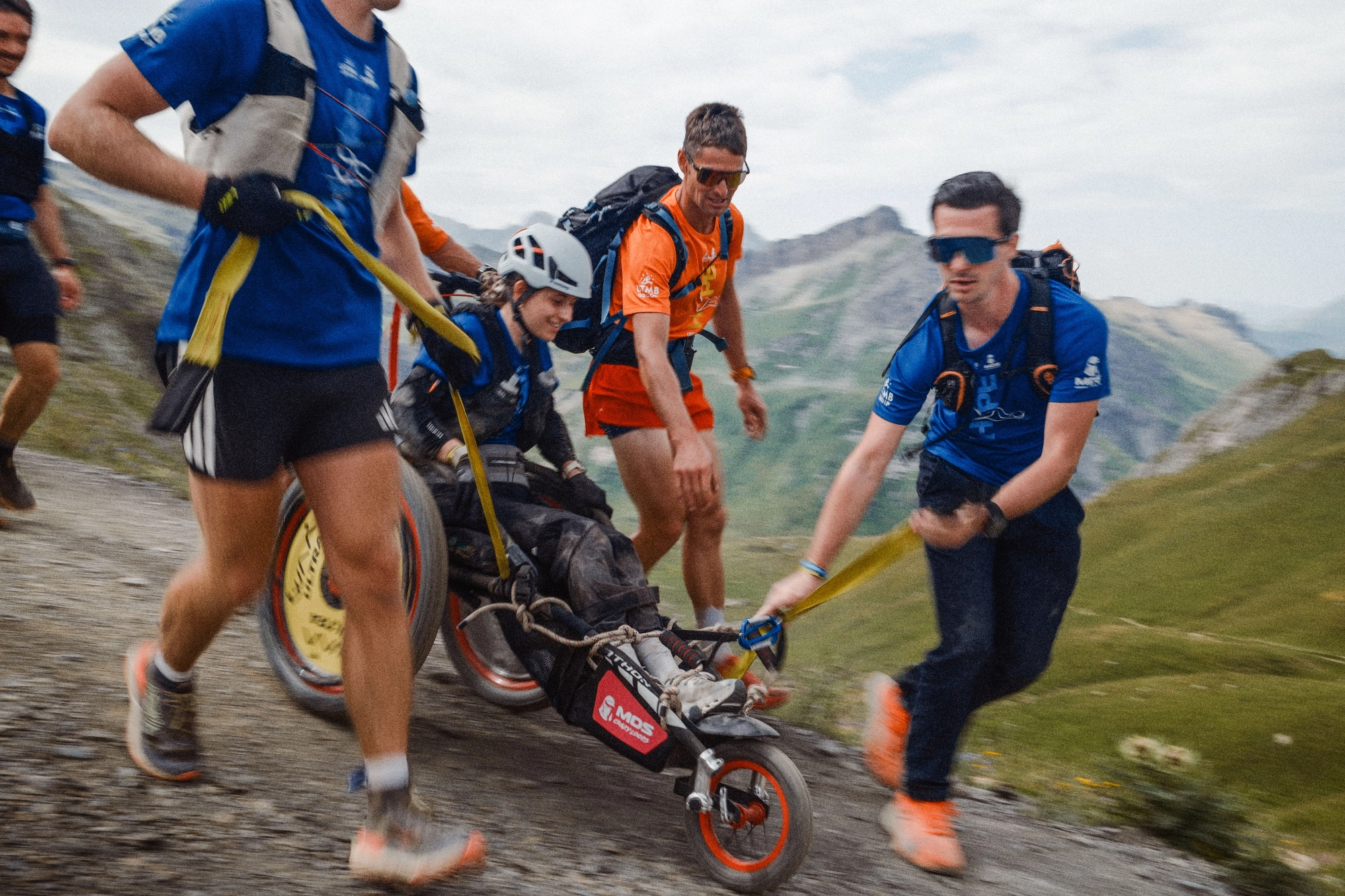
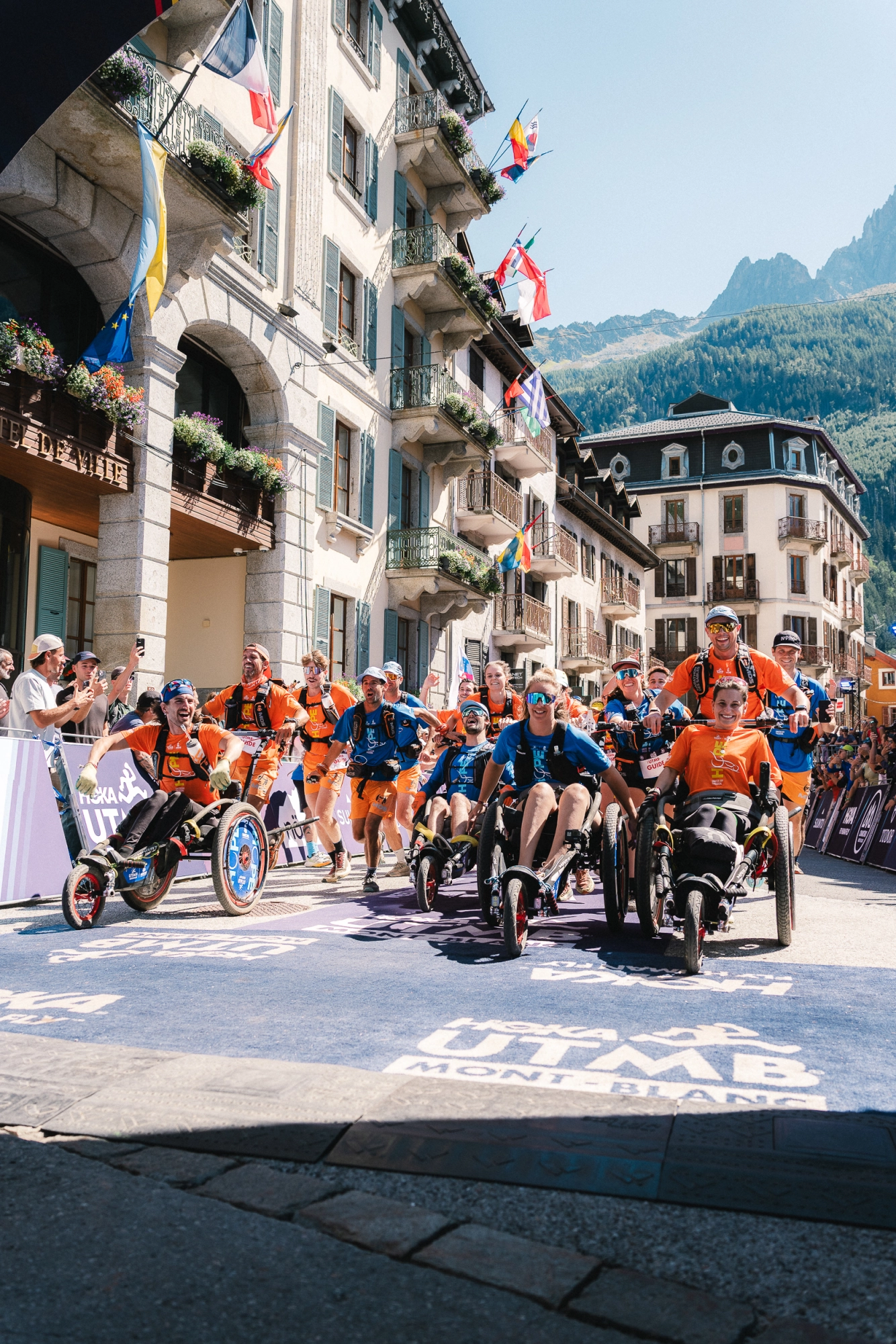
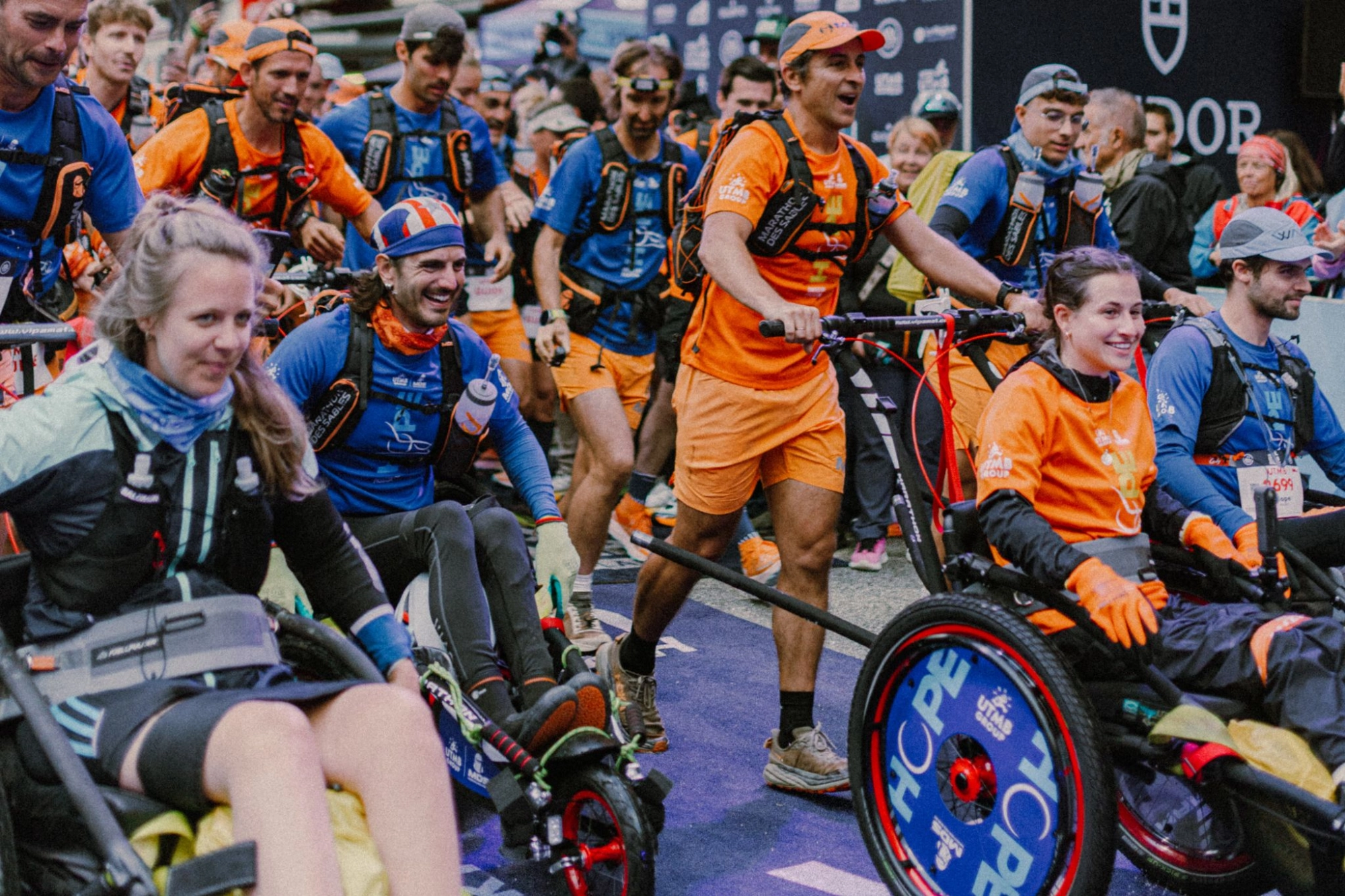
The start was eventually given on Friday, August 28 at 7:45 PM from Place du Triangle de l’Amitié in Chamonix, at the same time as the official UTMB start. Over 40 hours and 45 minutes, the four crews relayed each other along the 170 kilometres and 10,000 metres of elevation gain of the course, before reuniting to cover the final kilometres together and cross the finish arch, in the same place, on Sunday, August 30 at around 12:30 PM. Around each athlete: a crew of six to eight teammates depending on the section, rotating between pulling, pushing and providing assistance, plus at least one nurse or doctor to ensure continuous medical monitoring of both the athlete and the crew.


Far from being a passenger, the wheelchair athlete is a full participant in their own progress: they contribute to the effort, particularly on the climbs thanks to their wheelchair’s propulsion system, and help keep the chair balanced on the descents.

Image d'illustration article seul

MONTHS OF PREPARATION

This first edition is the outcome of several months of work. In June, a reconnaissance mission was carried out on the UTMB’s three legendary passes; Col de la Seigne, Grand Col Ferret and Col du Bonhomme, to assess whether they could be crossed in an ATW.


Over three days, the teams tested routes, analysed the technical difficulties and worked out the adaptations required. The verdict: the challenge was achievable, on three conditions. Modifying the wheelchairs technically, training the crews specifically, and organising the logistics down to the smallest detail.

Image d'illustration diaporama
01 / 04

OUT ON THE COURSE: THE MOUNTAIN AS A PLAYGROUND

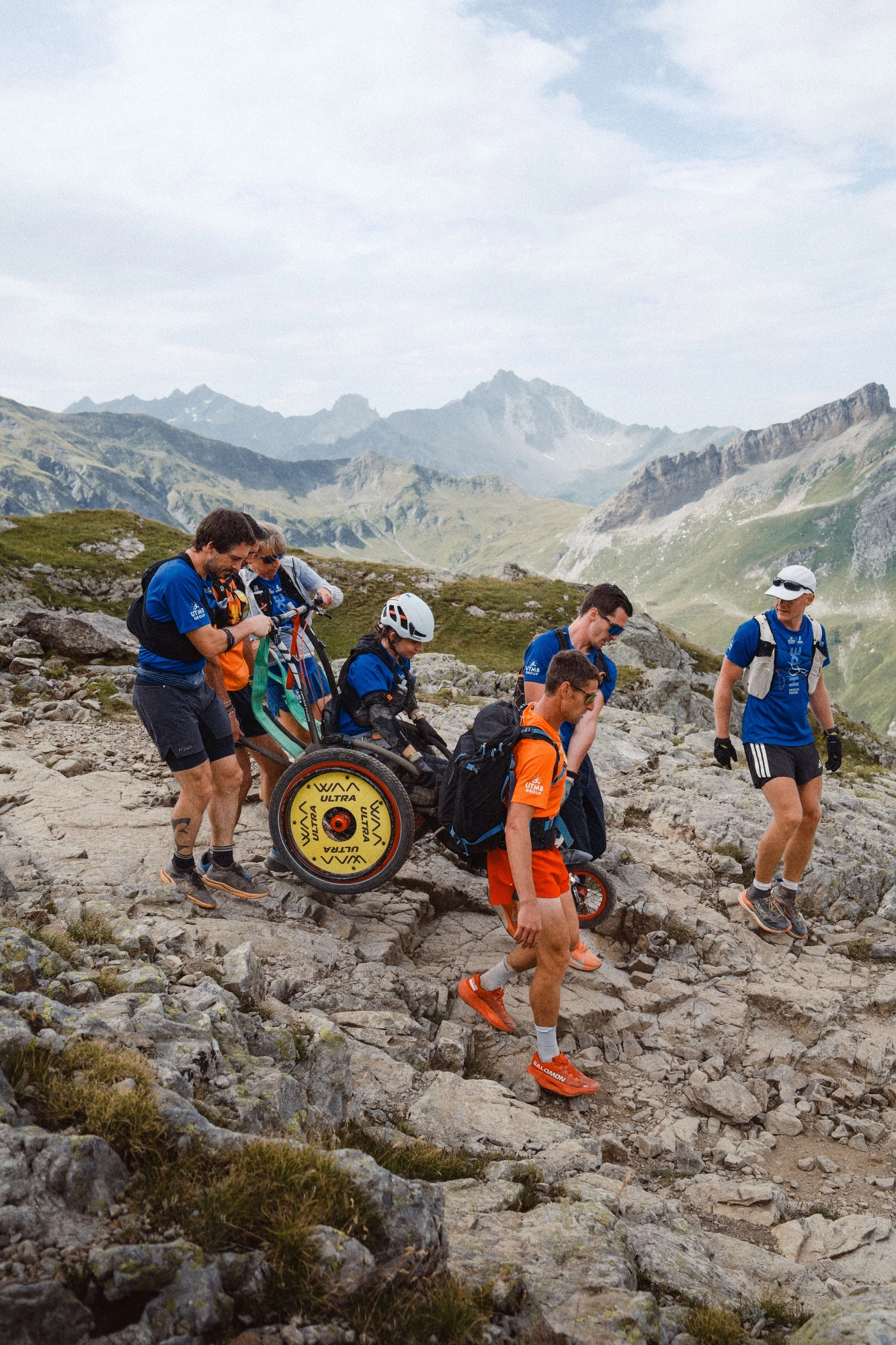
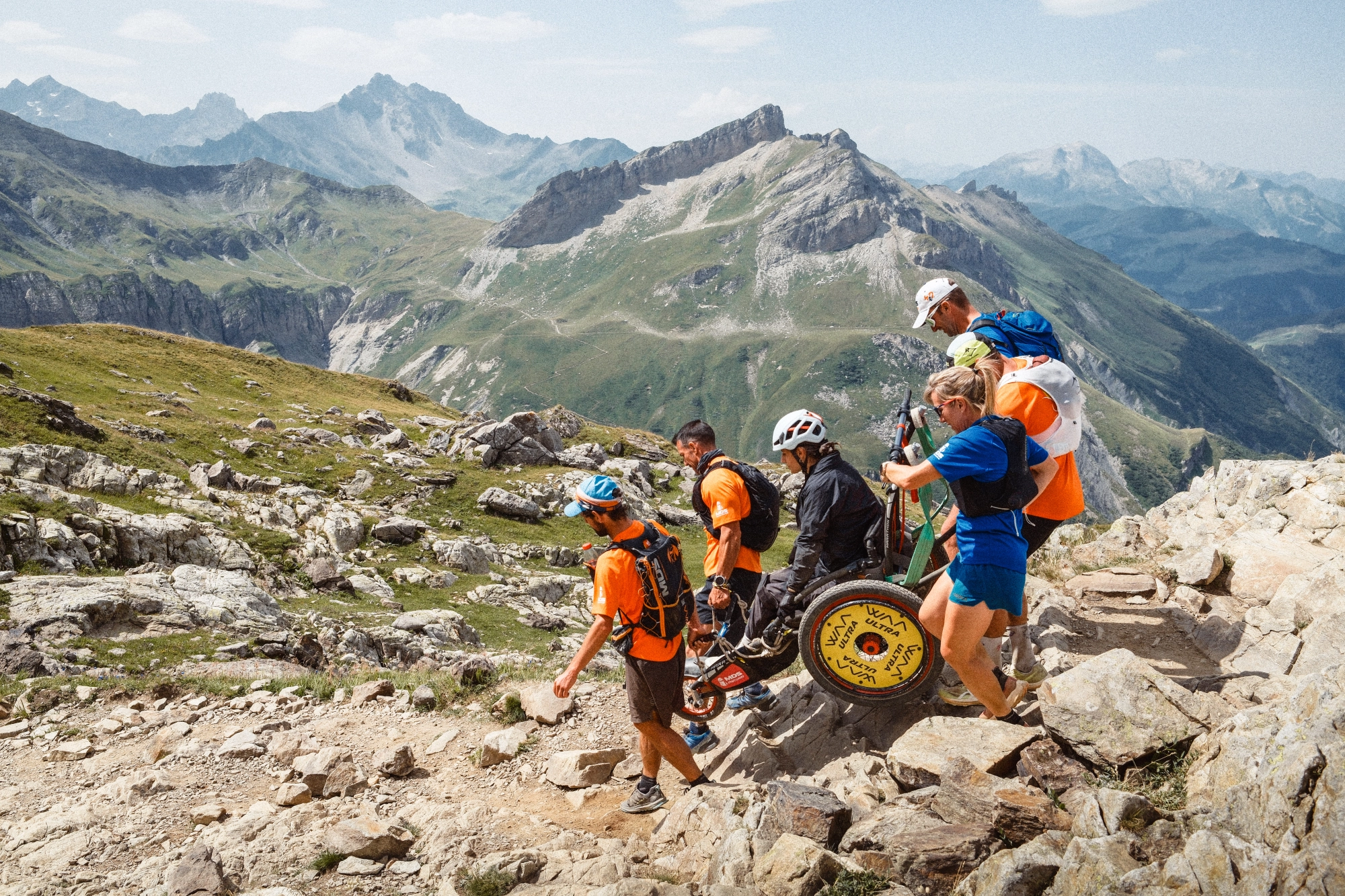
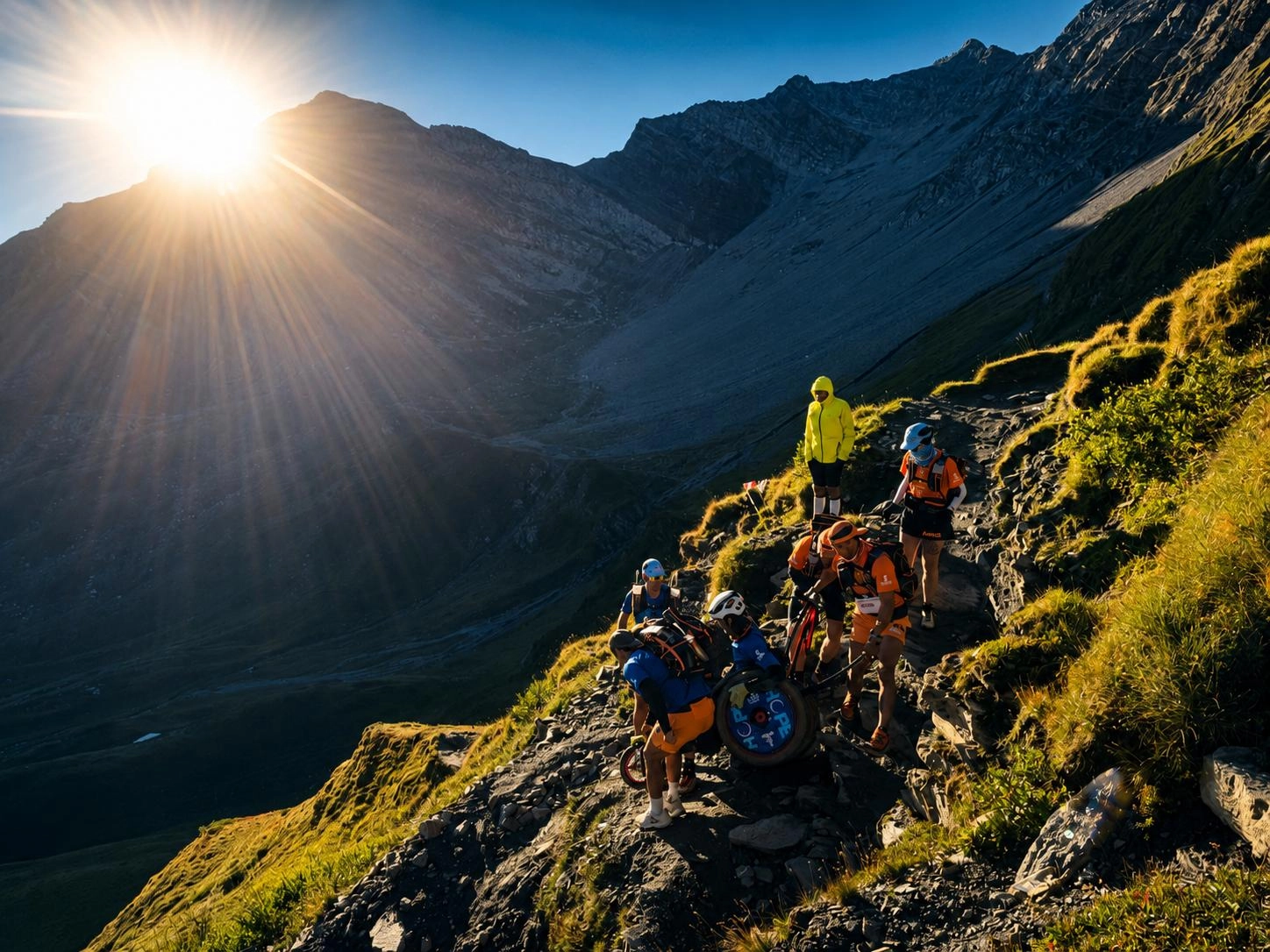
On the most technical and rocky sections of the route, every metre demanded concentration, communication and perfect coordination.


Demanding climbs, ultra-technical descents, passages where rocks, gradient and speed leave no room for improvisation: the crews made their way through terrain where no one expects them to go, adapting to every obstacle and relying on one another at all times.


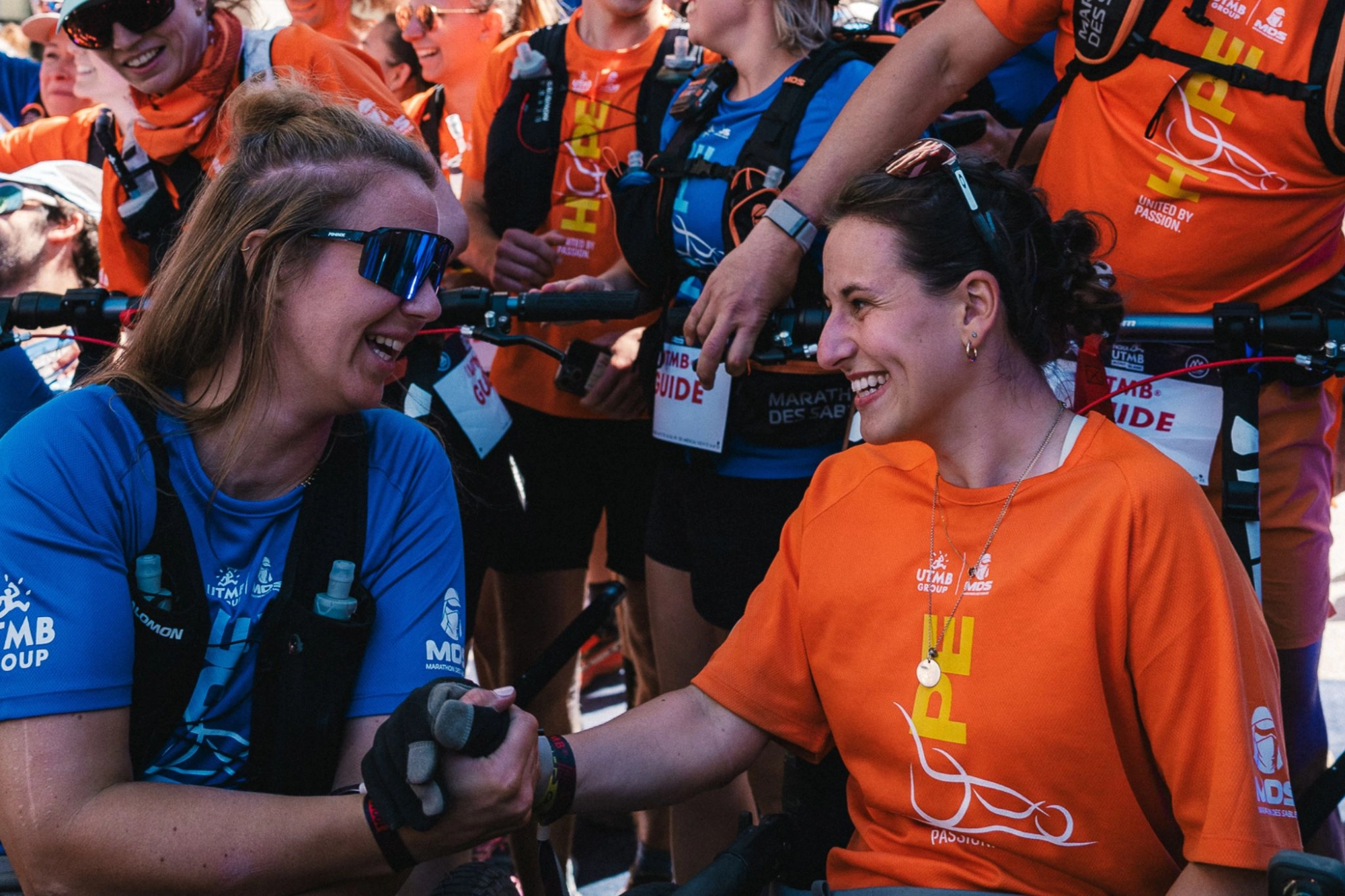
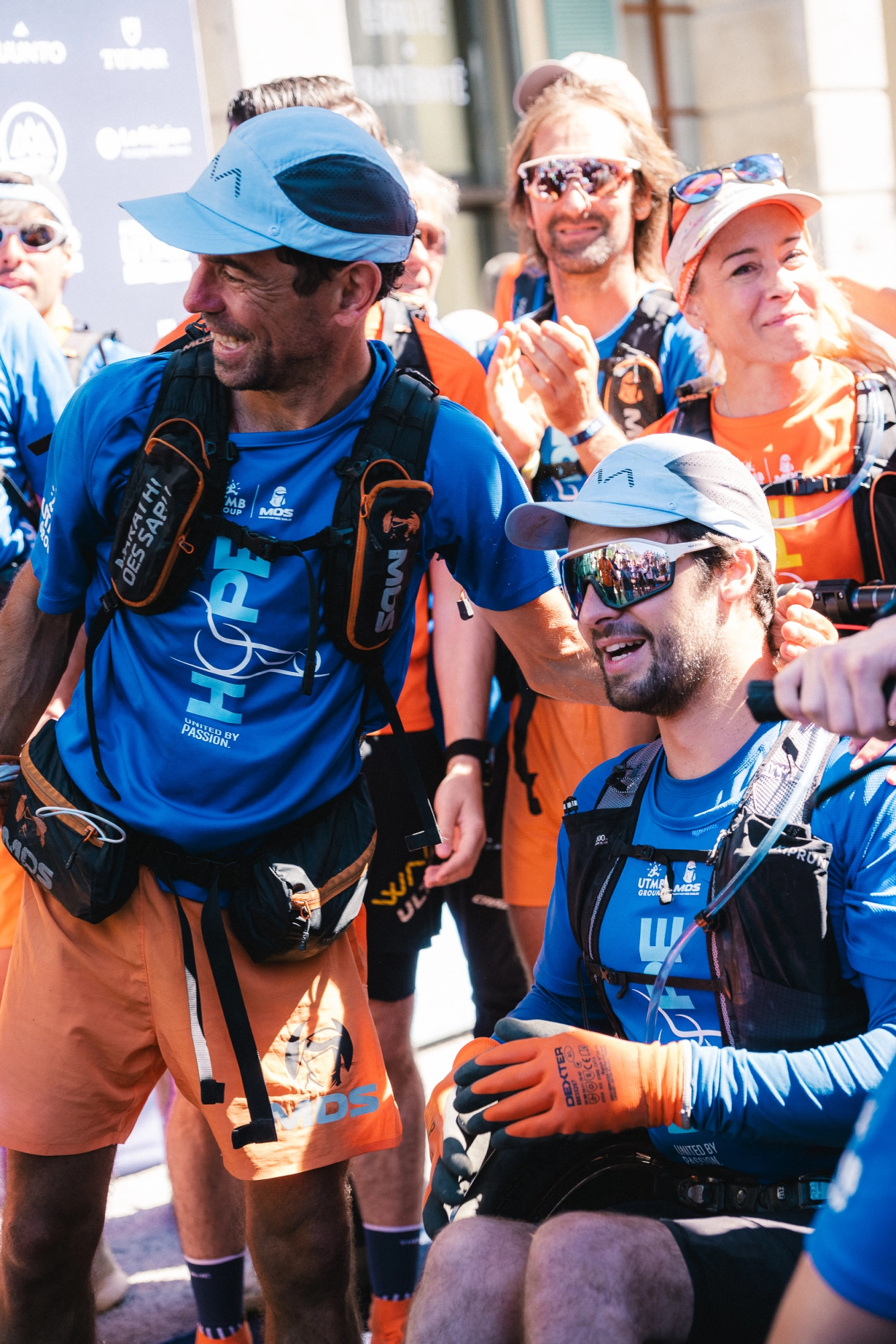
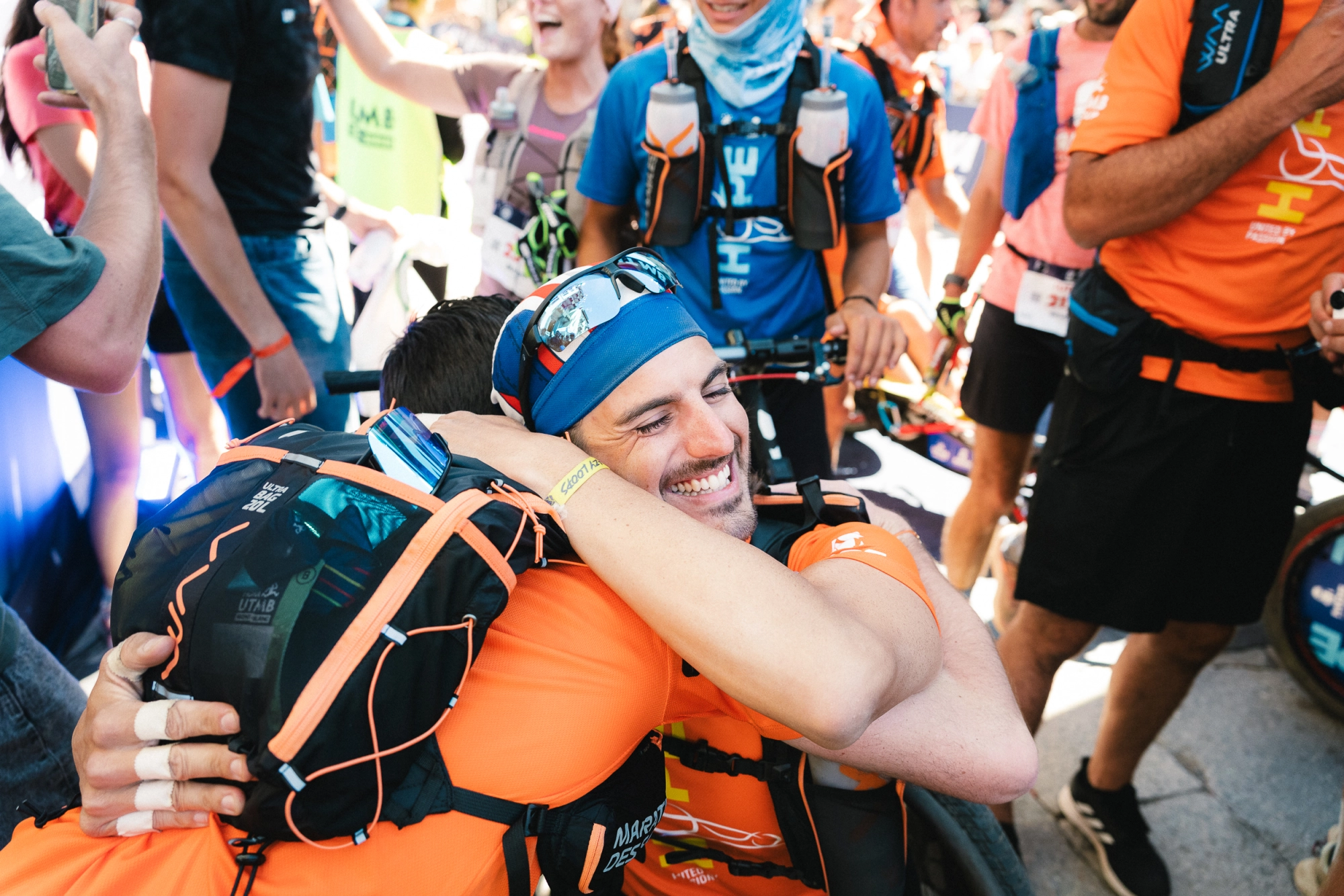
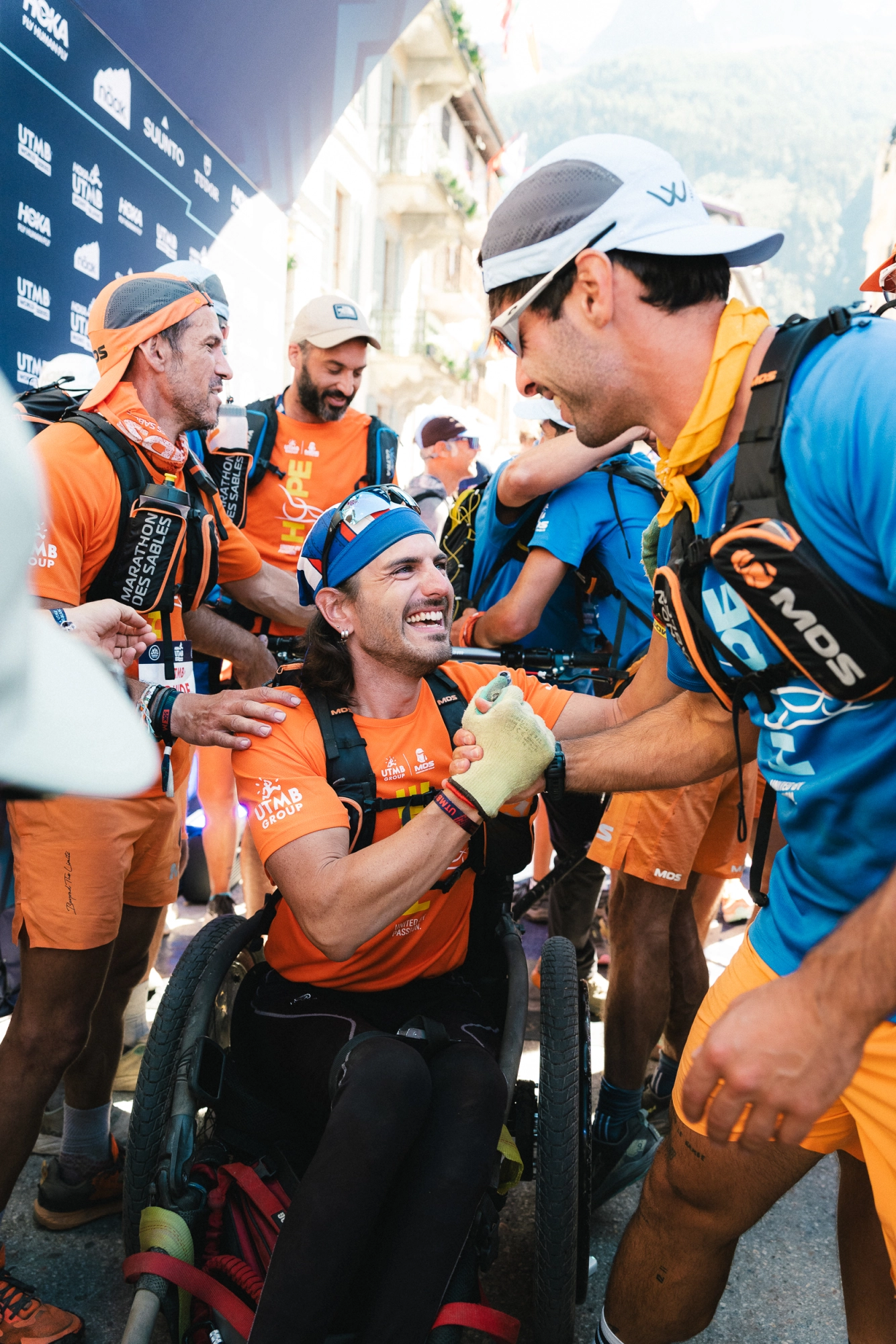
From the start in Chamonix to the most demanding sections, through the days, the nights, the fatigue and the emotions, they kept moving forward together. And they crossed the finish line the same way they started: together.

Image d'illustration article seul

THE FOUR ATHLETES

Delia Guggenheim — 23 (Switzerland)

A former ultra-trail runner and Ironman triathlete who became paraplegic in 2025 following a road accident. She completed the MDS Legendary in 2024 before her accident; this October she will take the start of the MDS Handi, this time in an all-terrain wheelchair.


Aubin Barillon — 32 (France)

Paraplegic since the age of 13 following a spinal angioma. A sports science (STAPS) master’s graduate and wheelchair basketball player, he was among the pioneers of the first MDS Handi in October 2024 and has since taken part in several MDS Crazy Loops.


Caroline Fruchaud — 33 (France)

Paraplegic since a serious skiing accident in 2018. A speaker and entrepreneur, she regularly practises trail running, cycling, wheelchair basketball and adaptive skiing. She too was at the start of the first MDS Handi and of several MDS Crazy Loops.


Federico Rossi — 32 (Italy)

Paraplegic since the age of 14 after a rare viral infection severely affected his neuromuscular system. A para-athlete and country musician, he notably climbed the Stelvio Pass — one of Europe’s most iconic ascents — solo, relying solely on upper body power.

Image d'illustration diaporama
01 / 04

TWO LONG-COMMITTED ORGANIZATIONS

For UTMB Group, HOPE builds on initiatives launched several years ago. A dedicated policy for athletes with disabilities has been applied across all UTMB World Series events since 2023: official recognition of eligible runners, dedicated registration, and tailored support before and during the race. Team Adaptive by UTMB, created in 2024, is its most visible expression: 15 athletes are competing in 2026 across all HOKA UTMB Mont-Blanc formats, on the same courses and with the same cut-off times as every other runner.


For MDS, inclusion is one of the founding pillars of its commitments. The MDS Handi allows mixed-ability crews to experience the Moroccan desert in all-terrain wheelchairs, with full logistics: racing wheelchairs provided, adapted bivouacs, a specialised medical team. The programme has since expanded to the MDS Crazy Loops in mountain resorts, and to the Champs-Élysées 10k, where five crews took part in 2026. MDS Clubs carry this mission further by making adapted wheelchairs available in several cities around the world.

Image d'illustration arrière-plan texte

WHAT COMES NEXT

Beyond this first edition, HOPE aims to move inclusion in outdoor sports forward. The lessons learned from this adventure will help improve equipment design, support methods and safety protocols, gradually opening up this kind of experience to other events and other regions. The next appointment is already set: the MDS Handi, from October 2 to 10, 2026. Some of the HOPE crews will be there again, joined by others discovering this incredible adventure, this time in the desert.


Because when the terrain says “impossible”, we answer with one word: HOPE.


United by passion, Powered by difference.